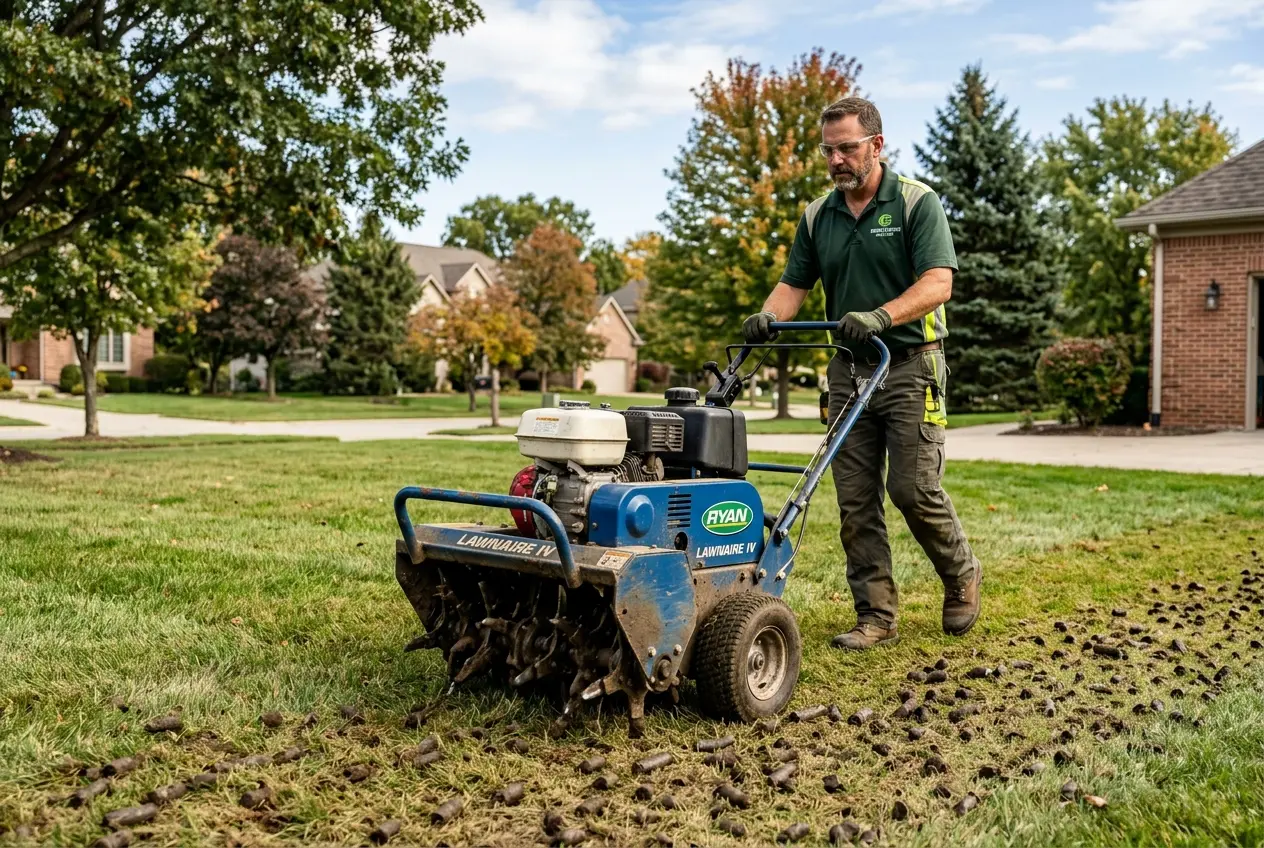
Piedmont red clay becomes concrete-hard by mid-summer, starving grass roots of air and water. Our heavy-duty aerators remove 3-inch plugs to break up compaction without damaging delicate topsoil.
We time treatments for early spring and fall when soil moisture is ideal. Post-service, we recommend overseeding with drought-resistant fescue blends that perform well in our climate. For properties near NC State's older neighborhoods, we take extra care around mature tree roots.
Most Raleigh lawns need annual aeration, but newer developments with imported topsoil may require less frequent service. We'll assess your specific conditions during our consultation.
We time treatments for early spring and fall when soil moisture is ideal. Post-service, we recommend overseeding with drought-resistant fescue blends that perform well in our climate. For properties near NC State's older neighborhoods, we take extra care around mature tree roots.
Most Raleigh lawns need annual aeration, but newer developments with imported topsoil may require less frequent service. We'll assess your specific conditions during our consultation.
Our Process
- 01 Step 1: Mark irrigation heads and shallow utilities
- 02 Step 2: Double-pass aeration pattern for complete coverage
- 03 Step 3: Remove and compost soil plugs
- 04 Step 4: Apply soil conditioner to accelerate recovery
Benefits
- Reduces water runoff by 40% in clay soils
- Allows fertilizers to reach root zones
- Prevents thatch buildup common in Raleigh's humid climate
- Improves resilience against summer heat stress
Frequently Asked Questions
Will aeration damage my sprinkler system?
We use utility maps and physical markers to avoid irrigation lines. In 12 years, we've never caused sprinkler damage.
How soon can I mow after aeration?
Wait 48 hours to allow soil structure to stabilize. The small holes will naturally fill in within 2-3 weeks.