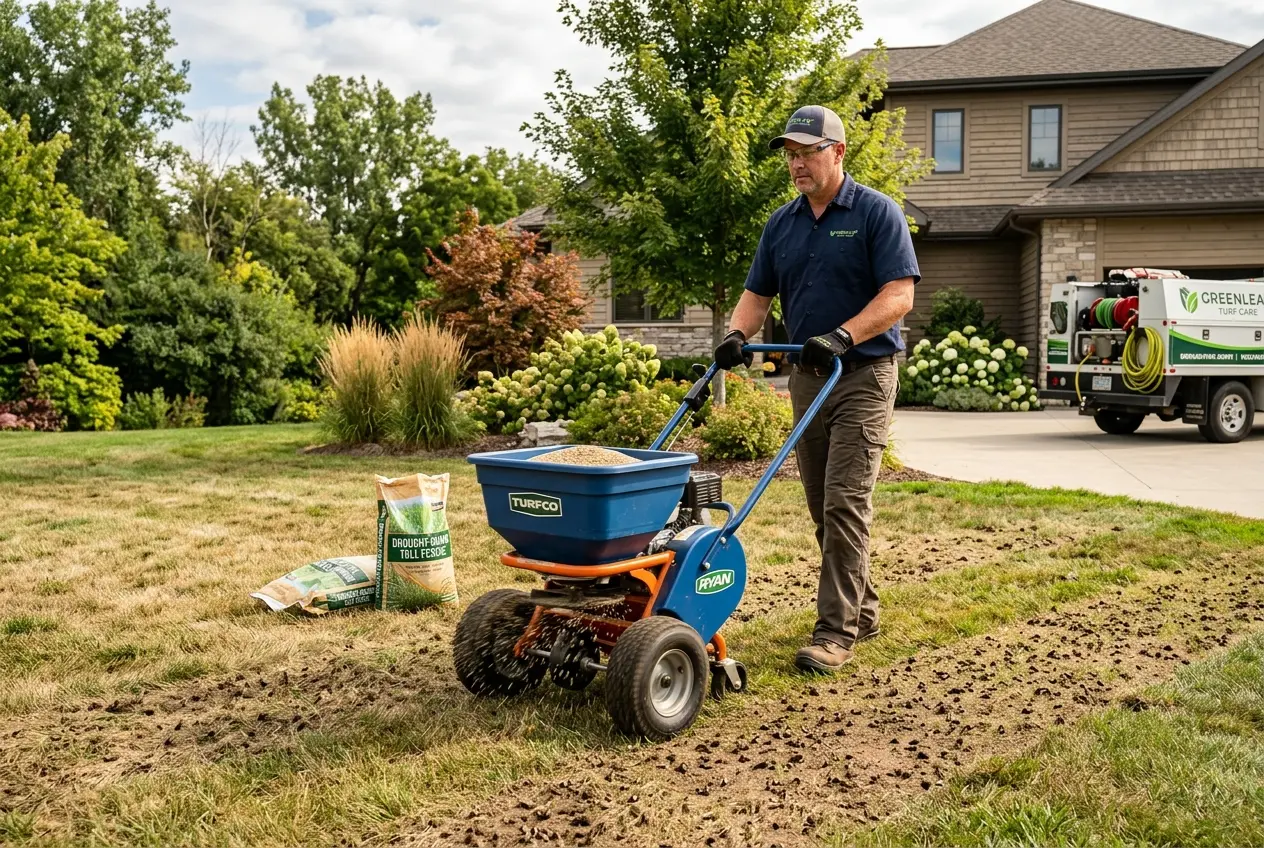
Traditional Kentucky bluegrass often fails in our climate, leaving thin patches by August. We use tall fescue blends specifically bred for the Southeast's heat and humidity.
Our process begins with dethatching to remove the spongy layer that harbors fungi. We then slice-seed at two angles for maximum germination, using a biodegradable mulch to retain moisture during establishment. For downtown properties with limited sun, we incorporate fine fescues that tolerate shade.
The best time for overseeding in Raleigh is late September through October, when cooler nights aid growth but soil remains warm. We adjust seed rates based on your lawn's sun exposure and foot traffic patterns.
Our process begins with dethatching to remove the spongy layer that harbors fungi. We then slice-seed at two angles for maximum germination, using a biodegradable mulch to retain moisture during establishment. For downtown properties with limited sun, we incorporate fine fescues that tolerate shade.
The best time for overseeding in Raleigh is late September through October, when cooler nights aid growth but soil remains warm. We adjust seed rates based on your lawn's sun exposure and foot traffic patterns.
Our Process
- 01 Step 1: Scalp existing grass to 1.5 inches
- 02 Step 2: Power rake to remove thatch
- 03 Step 3: Apply pre-emergent herbicide-free seed starter
- 04 Step 4: Slice-seed with 50% overlap pattern
Benefits
- Extends green season by 6-8 weeks
- Reduces water needs by 30% compared to traditional turf
- Creates dense growth that crowds out crabgrass
- Self-repairs from dog spots and high-traffic areas
Frequently Asked Questions
Will the new grass look different?
We match cultivars to your existing turf for seamless blending. The improved varieties maintain color better during drought.
How long until we can walk on the lawn?
Limit foot traffic for 3 weeks. The grass will be established enough for normal use after 4-6 weeks.